

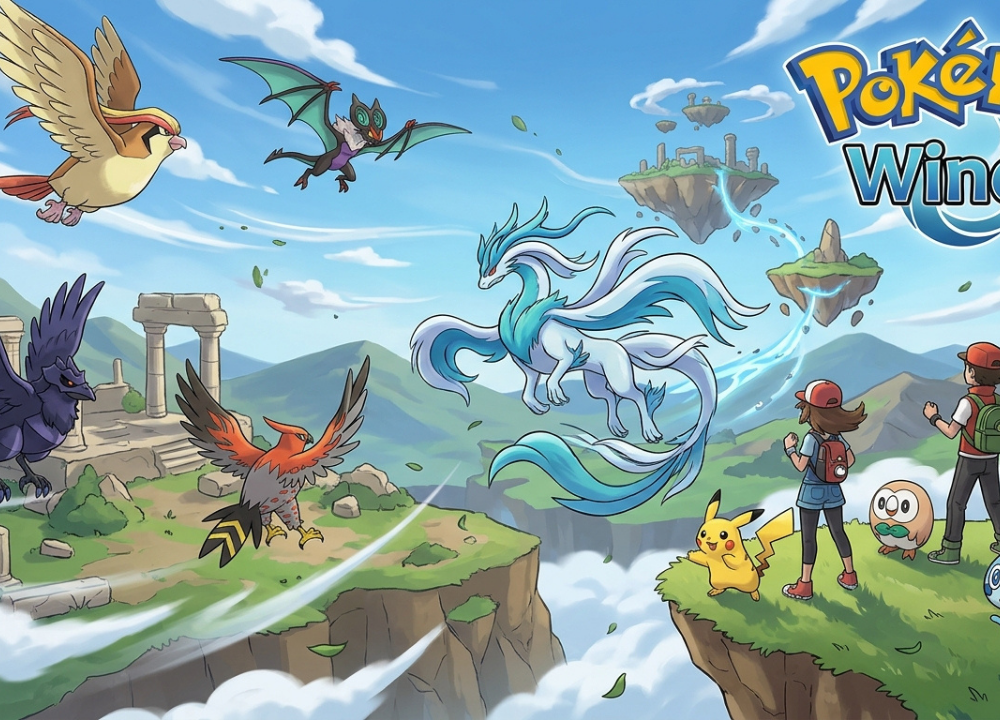
The Pokémon series has introduced players to memorable creatures, exciting battles, and adventures across imaginative regions for decades. One of the most enjoyable decisions in a new Pokémon game is choosing a first partner. That choice helps introduce players to the game’s battle mechanics and gives them a companion to take along on their journey.
The pokemon winds and waves starters have attracted attention because these upcoming games introduce a new adventure with three officially revealed first partner Pokémon. The names of these Pokémon are Browt, Pombon, and Gecqua. Each has its own appearance, personality, and elemental type, giving players three different options to consider.
For beginners, learning about these Pokémon is a useful way to prepare for the games. Understanding their types, abilities, and general characteristics can help players decide which one interests them most. However, it is important to separate confirmed information from fan-made artwork, unofficial leaks, and predictions about future evolutions.
What Are Starter Pokémon?
Starter Pokémon are the first partner creatures that players commonly choose near the beginning of a main-series Pokémon adventure. They introduce the player to important gameplay systems, including battles, type matchups, and team development.
In many main-series games, players choose from three starter options representing Grass, Fire, and Water types. These types have different strengths and weaknesses, making the decision interesting for both new players and experienced fans.
The pokemon winds and waves starters follow this familiar three-type pattern. Browt represents Grass, Pombon represents Fire, and Gecqua represents Water. Although the traditional type arrangement is recognizable, each new Pokémon brings its own design and personality to the series.
Why Does Your First Pokémon Matter?
Your first partner can become an important part of your team. As you progress through a Pokémon adventure, you may train it, learn new moves, and use it in different battles. However, choosing a starter does not mean you must use only that Pokémon throughout the game. Players generally build a team of different Pokémon to cover a wider range of types and battle situations.
What Do We Know About Pokémon Winds and Waves?
The official announcement confirms that Pokémon Winds and Pokémon Waves are new entries in the Pokémon role-playing game series. They are planned exclusively for Nintendo Switch 2 and are scheduled for a worldwide launch in 2027.
The games will feature an open world containing windswept islands and a large ocean. The official website also explains that Pokémon living in the region have developed unique ecosystems that fit their environment.
The pokemon winds and waves starters are among the confirmed features of the announcement. The three first partner Pokémon have been introduced with names, types, abilities, and short descriptions of their behavior.
Here are the key details currently available from the official announcement:
- Browt: A Grass-type Pokémon known as the Bean Chick Pokémon.
- Pombon: A Fire-type Pokémon known as the Puppy Pokémon.
- Gecqua: A Water-type Pokémon known as the Water Gecko Pokémon.
Pokemon Winds and Waves Starters: Types and Characteristics
The pokemon winds and waves starters each have a different elemental type. These types influence their usual battle matchups and help explain how they may fit into a player’s team. Their confirmed types provide a useful starting point for beginners, but they do not reveal everything about their eventual performance. Final statistics, move sets, and any future type combinations should not be guessed without reliable information.
Browt: The Grass-Type Starter
Browt is officially described as the Bean Chick Pokémon. It has leaves on its brow and uses photosynthesis while moving around energetically. The official description also notes that Browt can be somewhat clumsy. Grass-type Pokémon are often useful against Water-, Ground-, and Rock-type opponents. However, they commonly face disadvantages against Fire-, Flying-, Bug-, Poison-, and Ice-type moves.
Pombon: The Fire-Type Starter
Pombon is the Puppy Pokémon and the Fire-type choice among the three partners. According to its official description, a heat-generating organ inside its lungs causes the area beneath its throat to glow faintly. It is also described as friendly and guileless. Fire-type Pokémon commonly perform well against Grass-, Bug-, Ice-, and Steel-type opponents. They are generally vulnerable to Water-, Ground-, and Rock-type moves.
Gecqua: The Water-Type Starter
Gecqua is the Water Gecko Pokémon. Its official description says it launches springy balls of water from its tail. It is also described as intelligent and shrewd, with a tendency to put on airs. Water-type Pokémon are commonly effective against Fire-, Ground-, and Rock-type opponents. They are generally vulnerable to Electric- and Grass-type moves. Gecqua may appeal to players who like aquatic creatures or prefer a clever-looking companion. Its official description offers an early glimpse of its personality, but it does not establish its final battle strategy or evolution line.
Which Starter Type Suits Your Play Style?
There is no universal answer to which starter is best. Each type has advantages and disadvantages, and the usefulness of a particular Pokémon depends on the situation. The pokemon winds and waves starters give players three recognizable elemental choices. Beginners can use these differences to think about the kind of Pokémon they enjoy, while waiting for more information about the game’s battle mechanics.
Possible Starter Evolutions and Abilities
Evolution is a familiar part of the Pokémon series. Many Pokémon change into stronger or different forms as they develop, sometimes gaining new moves, abilities, or types. The precise evolution method varies between Pokémon. Naturally, fans are curious about what Browt, Pombon, and Gecqua might become as they grow. Their initial designs leave room for imaginative fan theories, and discussions about possible final forms can be an enjoyable part of following an upcoming game.
The confirmed information lists Browt with Overgrow, Pombon with Blaze, and Gecqua with Torrent. These are their announced abilities, but players should not assume that their later forms, moves, or additional abilities have been revealed. Before sharing an evolution chart or a claim about a final form, check whether it appears in official Pokémon materials. If it comes from fan art or an unverified post, label it clearly as speculation.
How to Choose the Best Starter Pokémon
Choosing a starter is partly a gameplay decision and partly a matter of personal taste. You may prefer a Pokémon because of its design, personality, type, or the possibilities you imagine for your team.
1. Choose a Pokémon You Like
You will likely spend time looking at and using your first partner throughout the adventure. If you enjoy a Pokémon’s design or personality, that is a perfectly reasonable reason to choose it. Browt, Pombon, and Gecqua have different appearances and descriptions, so consider which one appeals to you most.
2. Understand Type Matchups
Learning type matchups is useful because an opponent’s type can influence how effective an attack will be. A move that works well against one opponent may be less effective against another. You do not need to memorize every matchup immediately. Start with the basic Grass, Fire, and Water relationships and expand your knowledge as you play.
3. Build a Balanced Team
Your starter is only one member of your potential team. Other Pokémon can help cover weaknesses and give you more choices during battles. For example, if your main partner struggles against a particular type, you can look for another team member that handles that matchup more effectively. The exact Pokémon available in Winds and Waves will determine which combinations are possible.
4. Avoid Choosing Only Because of Popularity
Online polls and fan discussions can be entertaining, but they do not establish which starter is best for every player. A popular Pokémon may not fit your preferences, and a less popular one may become your favorite. When comparing the pokemon winds and waves starters, consider the available facts rather than assuming one option will automatically dominate the game.
Starter Pokémon Types Compared
The following table summarizes common type matchups. It describes the general Pokémon type system, not the complete battle performance of Browt, Pombon, or Gecqua in the upcoming games.
| Starter type | Common strengths | Common weaknesses |
| Grass | Effective against Water, Ground, and Rock | Vulnerable to Fire, Flying, Bug, Poison, and Ice |
| Fire | Effective against Grass, Bug, Ice, and Steel | Vulnerable to Water, Ground, and Rock |
| Water | Effective against Fire, Ground, and Rock | Vulnerable to Electric and Grass |
Pokemon Winds and Waves Starters: Facts vs. Fan Theories
Upcoming Pokémon games often inspire fan artwork, predictions, and discussions before release. These conversations can be fun, especially when fans imagine what a starter might look like after evolving.
How to Identify Confirmed Information
Start with the official Pokémon website, official game announcements, and the publisher’s verified news channels. These sources are the best places to check information about confirmed Pokémon names, types, abilities, release plans, and gameplay features.
Be Careful With Unofficial Leaks
An image described as a leaked evolution may be fan-made artwork. A post claiming to reveal an exclusive ability may also lack evidence. Before trusting such material, ask whether it links to an official announcement, provides a credible source, or has been independently verified. If the source cannot be established, treat the claim as unconfirmed.
Why Accurate Reporting Matters
Readers want useful information, not guesses presented as facts. Making the distinction clear improves the reliability of a gaming article and helps readers understand what is known at the time of publication.
Beginner Tips for Starting a Pokémon Adventure
If you are new to the series, you can prepare for a future Pokémon adventure by learning a few basic principles.
Learn Type Matchups Gradually
Start with the types you encounter most often and pay attention to the effectiveness messages shown during battles. Over time, you will become more familiar with which moves work well against different opponents.
Train More Than One Pokémon
A team with different types can offer more options than relying entirely on one powerful partner. Try to develop several Pokémon rather than allowing the rest of your team to fall far behind.
Experiment With Different Moves
A Pokémon’s move choices can affect how it performs in battle. Learn what each move does and consider whether it helps you deal with the opponents you face.
Explore the Game World
The official announcement describes Winds and Waves as open-world adventures featuring windswept islands and a vast ocean. These settings suggest that exploration will be an important part of the experience, although specific activities and mechanics should be confirmed through future announcements.
Follow Official Updates
Check official announcements for changes to the release schedule, new Pokémon reveals, gameplay demonstrations, and other confirmed details. This is particularly important when preparing a guide that readers may revisit over time.
Final Thoughts
The upcoming Pokémon Winds and Pokémon Waves games have already introduced three new first partners: Browt, Pombon, and Gecqua. Their Grass, Fire, and Water types give beginners three familiar starting points for understanding Pokémon battles. The best choice depends on your personal preferences and the kind of companion you want for your adventure. Learning basic type matchups, developing a balanced team, and following official announcements can help you prepare for the games.
FAQs
Q1: What Are Pokemon Winds and Waves Starters?
Ans: The pokemon winds and waves starters are Browt, Pombon, and Gecqua, the three officially announced first partner Pokémon for Poké mon Winds and Pokémon Waves. Their confirmed types are Grass, Fire, and Water, respectively.
Q2: Have the Starter Pokémon Been Officially Revealed?
Ans: Yes. The official Pokémon announcement introduced Browt, Pombon, and Gecqua and provided their types, abilities, and basic descriptions. Readers can verify these details.
Q3: What Types Might the Starter Pokémon Have?
Ans: Their types are already confirmed rather than merely predicted. Browt is Grass-type, Pombon is Fire-type, and Gecqua is Water-type. Additional type combinations, if any, should be confirmed through official information.
Q4: Will the Starter Pokémon Have Evolutions?
Ans: Their future evolution details should not be assumed without an official announcement. Although evolution is a familiar feature of the Pokémon series, fan predictions about these particular Pokémon remain speculation unless verified.
Q5: How Can Beginners Choose the Best Starter?
Ans: Consider the Pokémon’s design, personality, type, and your preferred play style. There is no need to choose the most popular option; selecting a Pokémon you enjoy is a good starting point.
