

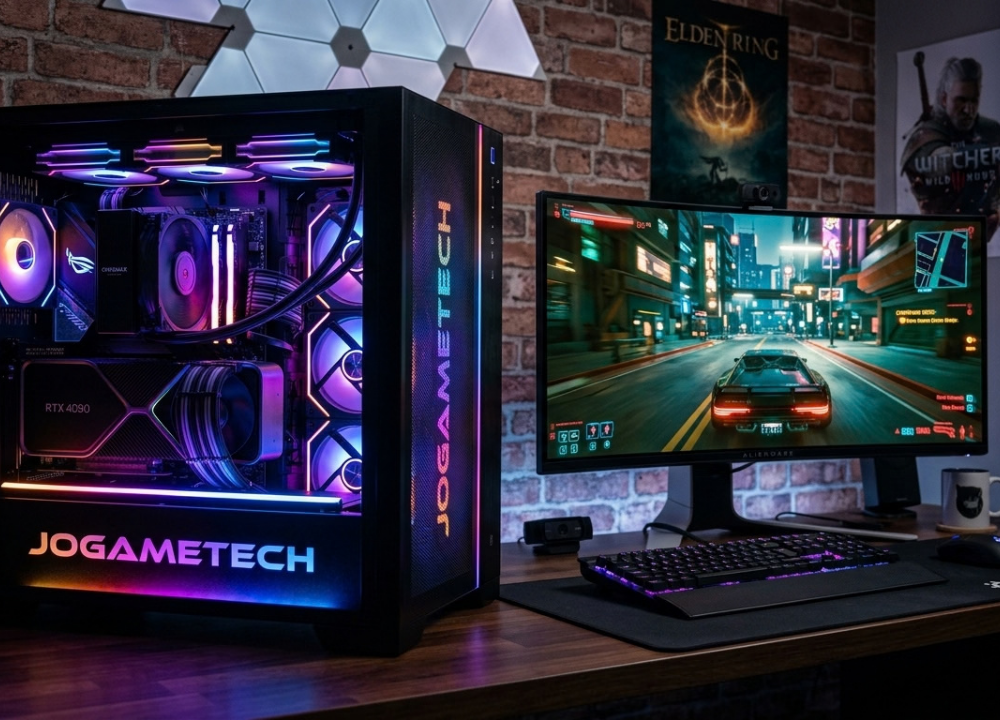
Building or upgrading a gaming PC does not always mean replacing the entire computer. In many cases, a few carefully selected improvements can make an older system feel faster, smoother, and more capable of handling modern games. The key is knowing which component is holding the system back before spending money.
This guide explains how to update a gaming PC jogametech with a practical approach that covers hardware upgrades, software updates, compatibility checks, performance testing, and common mistakes. Whether you are new to PC gaming or already understand basic hardware, the goal is to help you make informed upgrade decisions.
What Does It Mean to Update a Gaming PC?
When people talk about updating a gaming PC, they may mean two different things. A software update involves Windows, graphics drivers, chipset drivers, BIOS firmware, or game-related software. A hardware upgrade involves physically replacing or adding components such as a graphics card, processor, RAM, storage drive, or power supply. Understanding this difference is important because not every performance problem requires new hardware.
For example, outdated graphics drivers can cause compatibility problems, while insufficient RAM may cause stuttering and slow multitasking. Similarly, an old hard drive can make games take much longer to load even when the processor and graphics card are still capable. The first step in how to update a gaming PC jogametech is therefore to identify what your computer actually needs.
Hardware Upgrades vs. Software Updates
Hardware upgrades physically change the capabilities of the computer. Common examples include:
- Installing a more powerful GPU
- Replacing an older CPU
- Increasing RAM capacity
- Moving from an HDD to an SSD
- Installing a larger or faster storage drive
- Replacing an inadequate power supply
- Improving CPU or case cooling
Software updates are different. They can include:
- Windows updates
- GPU driver updates
- Chipset driver updates
- BIOS or UEFI updates
- Game patches
- Utility and peripheral software updates
Why Should You Update a Gaming PC?
Gaming requirements change over time. A computer that handled games comfortably several years ago may struggle with newer releases, especially at higher resolutions or graphics settings. Learning how to update a gaming PC jogametech can help extend the useful life of an existing system rather than forcing you to purchase an entirely new computer.
Some common reasons for upgrading include:
- Low or inconsistent FPS
- Game stuttering
- Long loading times
- Insufficient storage
- High RAM usage
- Overheating
- Outdated drivers
- Poor performance at higher resolutions
- Compatibility problems with newer games
Check Your Gaming PC Before Upgrading
Before buying anything, identify the hardware already inside your PC. This is one of the most important parts of how to update a gaming PC jogametech because compatibility should always come before performance expectations.
Write down your current specifications, including:
- CPU model
- GPU model
- RAM capacity and speed
- Motherboard model
- Storage type and capacity
- PSU wattage
- Operating system
- CPU cooler
- PC case dimensions
Check the CPU and GPU
The CPU and GPU are two of the most important components for gaming performance. Knowing their exact models makes it easier to determine whether an upgrade is necessary. The GPU generally has a major influence on graphical performance, resolution, and visual settings. The CPU can become particularly important in CPU-heavy games, competitive titles with high frame-rate targets, simulation games, and large multiplayer environments.
Check RAM and Storage
Look at both the amount and configuration of your RAM. A system with limited memory may experience slowdowns when games are running alongside browsers, streaming software, communication apps, and other programs. Storage also matters. An SSD can significantly improve Windows startup, application loading, and game loading compared with a traditional mechanical hard drive.
Identify the Main Gaming Bottleneck
Before deciding how to update a gaming PC jogametech, monitor your system while playing the games that give you trouble. Look at CPU utilization, GPU utilization, RAM usage, temperatures, and frame rates.
Signs of a GPU Bottleneck
A GPU limitation may become noticeable when:
- GPU usage stays very high during gaming
- Lowering graphics settings significantly increases FPS
- Games struggle at higher resolutions
- Modern titles require very low graphics settings
- The graphics card is several generations old
Signs of a CPU Bottleneck
A CPU limitation can appear differently. You may notice:
- High CPU usage during games
- Inconsistent frame rates
- Strong GPU hardware that is not being fully utilized
- Performance limitations in CPU-intensive games
- Poor minimum FPS despite having a capable graphics card
Signs You Need More RAM
Insufficient RAM can cause:
- Stuttering
- Slow application switching
- Heavy memory usage
- Slowdowns when multiple applications are open
- Longer loading or asset-streaming problems in some games
Which Gaming PC Component Should You Upgrade First?
There is no universal upgrade order. The best choice depends on the hardware you already own and the type of games you play.
| Component | Main Benefit | Important Checks Before Upgrade |
| GPU | Higher graphics performance and FPS | PSU, case size, PCIe slot, connectors |
| CPU | Better CPU-heavy gaming and multitasking | Socket, motherboard, BIOS, cooling |
| RAM | Better multitasking and fewer memory limitations | Capacity, slots, memory type, speed |
| SSD | Faster loading and system responsiveness | Interface, motherboard support, capacity |
| PSU | Reliable power for upgraded hardware | Wattage, connectors, quality, efficiency |
| Cooling | Better temperatures and sustained performance | Case space, socket, airflow |
How to Update a Gaming PC Jogametech Step by Step
Once you understand your existing hardware, you can follow a structured upgrade process.
Step 1: Record Your Current Specifications
Create a simple list of every major component. Include exact model numbers whenever possible. This information helps prevent compatibility mistakes and makes it easier to compare potential upgrades.
Step 2: Find the Performance Problem
Play the games you normally use and monitor performance. Pay attention to FPS, CPU usage, GPU usage, memory consumption, and temperatures. Do not base your decision only on what a component looks like on paper. Real-world performance depends on the entire system.
Step 3: Choose a Compatible Upgrade
After identifying the limitation, research compatible replacement parts. For a GPU, check power requirements, physical dimensions, connectors, and motherboard compatibility. For a CPU, check the motherboard socket, supported processors, BIOS requirements, and cooling requirements.
Step 4: Back Up Important Files
Before making major hardware changes or performing a BIOS update, back up important documents, photos, game saves, and other valuable files. A backup does not take long compared with the potential inconvenience of losing important information.
Step 5: Shut Down and Prepare the PC
Turn off the computer completely and disconnect it from power before installing internal hardware. Work on a clean surface and take reasonable anti-static precautions. Handle components carefully and avoid touching sensitive electrical contacts unnecessarily.
How to Upgrade the Graphics Card
For many gaming systems, the graphics card is one of the most influential upgrade options. A new GPU can improve frame rates, graphical quality, resolution support, and access to newer graphics technologies. However, the graphics card should not be selected independently from the rest of the computer.
Before purchasing one, check:
- PSU wattage
- Required power connectors
- GPU length and thickness
- Case clearance
- Motherboard slot
- Monitor resolution
- Desired refresh rate
- CPU performance
How to Upgrade the CPU
A processor upgrade can improve gaming performance, multitasking, and application responsiveness. However, CPU upgrades require more compatibility checks than simply comparing processor specifications. The motherboard socket, chipset, BIOS version, power delivery, and cooling system all matter.
Why BIOS Compatibility Matters
A motherboard may physically support a processor socket while still requiring a particular BIOS version to recognize a newer CPU. Always check the motherboard manufacturer’s CPU support information before installing a new processor.
How to Upgrade RAM
RAM upgrades are often straightforward, but compatibility still matters. Check the motherboard’s supported memory type, maximum capacity, available slots, and recommended configurations. If possible, use compatible modules that can operate together properly.
How to Upgrade to an SSD
Switching from an HDD to an SSD can make a gaming PC feel considerably more responsive.
An SSD can improve:
- Windows startup
- Game loading
- Application launching
- File transfers
- General system responsiveness
Update Gaming PC Drivers and Software
Hardware is only one part of maintaining a gaming computer. Software should also be kept in reasonable condition. When considering how to update a gaming PC jogametech, remember to include graphics drivers, Windows updates, chipset software, and other relevant system components.
Update Graphics Drivers
Use the official driver software or official support resources provided by the GPU manufacturer. New drivers can introduce game-specific optimizations, compatibility fixes, security improvements, and support for newer technologies.
Update Windows
Keeping Windows reasonably current can improve compatibility and security. However, it is still sensible to review major updates if your PC relies on specialized software or older hardware.
Choose Gaming PC Upgrades Based on Your Budget
A successful upgrade does not require buying the most expensive components. The practical approach is to spend money where it addresses an actual limitation.
Budget Upgrades
Budget-conscious users may consider:
- Adding RAM
- Replacing an HDD with an SSD
- Improving case airflow
- Updating drivers
- Cleaning dust from cooling components
- Adjusting demanding game settings
Mid-Range Upgrades
A mid-range system may benefit from a newer GPU, CPU, or balanced combination of RAM and storage. The exact choice should depend on the existing configuration rather than simply following a generic upgrade list.
High-End Upgrades
High-end systems may require a more complete platform upgrade. This could involve a modern CPU, motherboard, high-performance GPU, faster memory, improved cooling, and a suitable PSU.
Check Compatibility Before Buying Parts
When considering how to update a gaming PC jogametech, review every connection between the proposed component and the rest of the system.
Motherboard Compatibility
Check:
- CPU socket
- Chipset
- BIOS support
- RAM generation
- Maximum RAM capacity
- PCIe compatibility
- M.2 support where applicable
Case Compatibility
A graphics card may technically work with a motherboard but still fail to fit inside a compact case. Check GPU length, thickness, CPU cooler height, radiator clearance, and available fan positions.
PSU Compatibility
Check total wattage and the specific power connectors required by the upgraded GPU and other components. Avoid choosing a PSU solely because its wattage number looks high. Quality, efficiency, protection features, and appropriate connectors also matter.
Improve Gaming Performance After an Upgrade
After upgrading, how to update a gaming PC jogametech also involves testing and optimizing the system so that you can determine whether the upgrade actually solved the original problem.
Monitor FPS and Temperatures
Run games that previously caused problems and compare their performance with your previous results.
Monitor:
- Average FPS
- Minimum FPS
- CPU temperature
- GPU temperature
- CPU utilization
- GPU utilization
- RAM usage
Optimize Game Settings
If a game is struggling, consider adjusting demanding options such as shadows, reflections, volumetric effects, resolution, texture settings, and other graphics features. The ideal configuration depends on your GPU, CPU, monitor resolution, and desired frame rate.
Common Gaming PC Upgrade Mistakes
Many upgrade problems are preventable.
Buying Without Checking Compatibility
A powerful component is not automatically compatible with every gaming PC. Before buying, check the motherboard, case dimensions, available slots, and power supply requirements to make sure the new hardware will work properly.
Ignoring the Bottleneck
Upgrading a component that is already performing well may not provide a noticeable improvement. Monitor CPU, GPU, RAM, and storage usage first so you can identify which part is actually limiting your gaming performance.
Underestimating Power Requirements
A newer graphics card or processor may require more power than your existing PSU can safely provide. Check the recommended wattage and required power connectors before installing a new component.
Forgetting Cooling
More powerful CPUs and GPUs can produce additional heat during demanding games. Make sure your case has adequate airflow and that your CPU cooler and case fans are working properly to maintain stable performance.
Skipping Backups
Always back up important files before making major hardware changes or updating firmware. A backup gives you an extra layer of protection if something unexpected happens during the upgrade process.
How Often Should You Update a Gaming PC?
There is no universal schedule for PC upgrades. Some gamers may keep the same system for several years, while others upgrade individual components more frequently. Instead of upgrading because a new component has been released, look for practical signs that your current system is no longer meeting your needs.
Consider an upgrade when:
- Games no longer maintain your desired FPS
- You regularly need to lower graphics settings
- Storage is consistently full
- Your system lacks enough RAM
- New games expose a clear hardware limitation
- Your existing component no longer supports your desired resolution or refresh rate
Final Thoughts
Learning how to update a gaming PC jogametech is mainly about making informed decisions rather than simply buying newer hardware. Start by documenting your existing specifications, identify the component or software causing the limitation, and then choose an upgrade that fits the rest of the system. Whether you need a better GPU, more RAM, a faster SSD, a newer CPU, improved cooling, or updated drivers, compatibility should always be checked before making changes. After installation, test the system using real games and monitor FPS, temperatures, and component usage.
FAQs
Q1: What should I upgrade first on a gaming PC?
Ans: The first upgrade should usually address the component causing the biggest performance limitation. Monitor your CPU, GPU, RAM, storage, and temperatures before deciding.
Q2: How do I know if my gaming PC needs an upgrade?
Ans: Frequent stuttering, low FPS, long loading times, insufficient storage, high memory usage, and difficulty running newer games can all indicate that an upgrade may be useful.
Q3: Can I upgrade my gaming PC without replacing everything?
Ans: Yes. Many gaming PCs can be improved by replacing one or two components while keeping the motherboard, case, storage, or other existing hardware.
Q4: Should I upgrade RAM or GPU first?
Ans: It depends on the current system. If the GPU is limiting graphical performance, a graphics upgrade may help more. If the system frequently runs out of memory, adding RAM may provide greater practical benefits.
Q5: How do I check whether a new graphics card is compatible?
Ans: Check the motherboard slot, PSU wattage, power connectors, GPU dimensions, case clearance, and the manufacturer’s system requirements before buying.
