

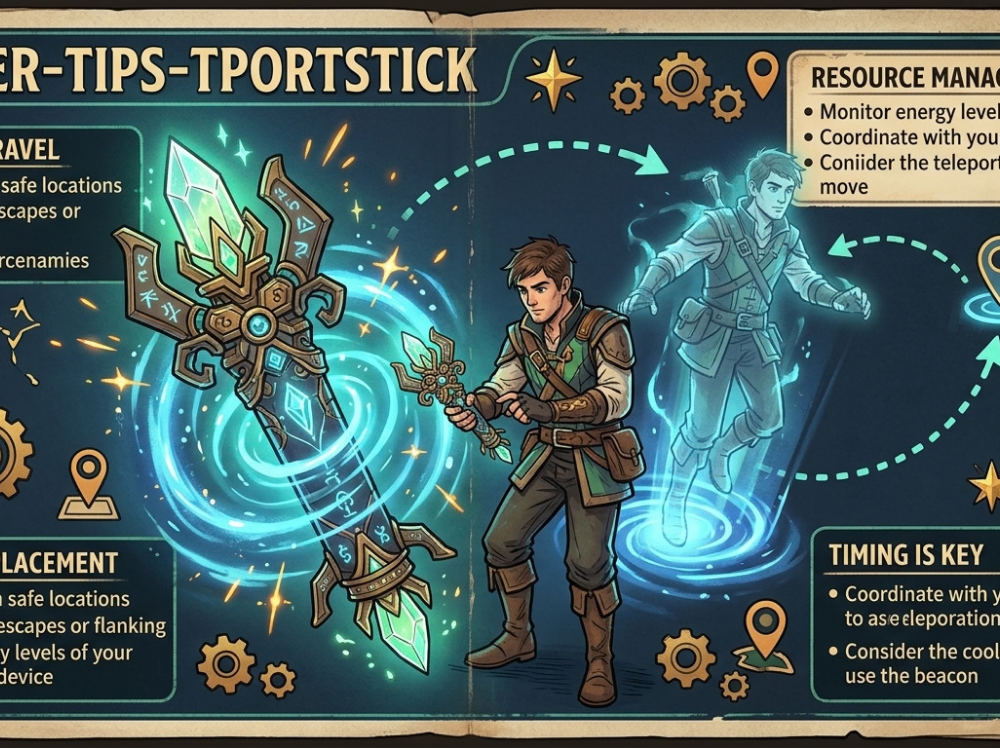
Improving at a game rarely comes from one secret trick. Most progress comes from understanding the controls, learning how the game responds to your actions, practicing consistently, and making better decisions over time. For players looking to sharpen their performance, player tips tportstick can provide a useful starting point for building stronger gameplay habits.
Whether you are opening the game for the first time or trying to become more consistent, the right approach can make practice more productive. Instead of rushing through every challenge, focus on learning what works, recognizing mistakes, and gradually improving your timing and control.
What Is Tportstick?
Tportstick can be approached as a gameplay experience where control, timing, awareness, and decision-making can influence how smoothly a player performs. The exact challenge may vary depending on the game mode or situation, but the basic principle remains the same: understand what the game expects and respond with deliberate actions. For beginners, player tips tportstick are most useful when they focus on fundamentals rather than complicated techniques. Learning the interface, understanding objectives, and becoming comfortable with movement create a foundation for later improvement.
Understand the Basic Gameplay
Before trying to play quickly, spend some time identifying the main objective. Look at the instructions, available controls, scoring system, and any rules that affect progress. A few minutes spent learning these details can prevent repeated mistakes later. If the game introduces new mechanics gradually, treat each one as an opportunity to learn. Avoid assuming that a technique from another game will automatically work here. Small differences in movement, timing, or controls can have a noticeable effect on performance.
Learn the Controls First
Good control is the foundation of consistent gameplay, and player tips tportstick can help new players identify which fundamentals deserve attention first. Make sure you know which keys, mouse inputs, touchscreen gestures, or other controls perform important actions. If an input feels unfamiliar, practice it in a low-pressure situation.
Essential Player Tips Tportstick Beginners Should Know
The first stage of improvement should be about control and awareness. Many new players make the mistake of trying to move as quickly as possible before they understand how the game reacts.
Start Slowly and Build Confidence
A slower pace gives you more time to observe what is happening. It also makes it easier to identify whether a mistake came from poor timing, incorrect positioning, or an input error. Once basic actions become comfortable, gradually increase your speed. This creates a more reliable skill base than repeatedly rushing and restarting.
Read Instructions and Tutorials
Tutorials are not just for complete beginners. They often explain mechanics that may be easy to overlook during normal play. Read important instructions and pay attention when the game introduces a new feature.
Practice One Skill at a Time
Focused practice is easier to measure. If movement is your weakness, spend a session working on movement. If timing causes most of your mistakes, concentrate on timing. This approach prevents practice from becoming unfocused and makes improvement easier to notice.
Improve Movement and Positioning
Movement is often more important than speed, which is why player tips tportstick should emphasize controlled actions rather than rushing.
Move With Purpose
Before making an important move, consider where you need to go and what you need to accomplish. Unnecessary movement can make a situation harder to control. Good movement should support the objective. When you know why you are moving, it becomes easier to correct mistakes and repeat successful actions.
Improve Your Timing
Timing is the ability to perform an action at the appropriate moment. It becomes especially important when challenges involve patterns, changing conditions, or limited opportunities. Try to recognize visual or gameplay cues before reacting. With practice, you may begin to anticipate an event rather than responding after it has already happened.
Pay Attention to Positioning
Positioning affects how many options you have available. A poor position can force you into a difficult reaction, while a useful position can give you more time to respond. Develop the habit of checking your surroundings before committing to an action. This small pause can improve decision-making without making gameplay unnecessarily slow.
How to Improve Your Gameplay Strategy
Strong gameplay is not only about mechanical skill. Strategy matters because it determines how you use your skills in different situations.
Understand the Main Objective
Always keep the primary goal in mind. It is easy to become distracted by secondary actions or try to complete something quickly without considering the larger objective. Ask yourself what action provides the most useful progress. This simple question can help you avoid wasting time.
Make Better Decisions Under Pressure
Pressure can cause players to react too quickly. When possible, take a brief moment to identify the situation before acting. If there are several possible choices, consider the likely result of each one. You do not need to calculate everything perfectly; the goal is to replace automatic reactions with informed decisions.
Common Mistakes Players Should Avoid
Recognizing mistakes is an important part of learning. Many players repeat the same errors because they focus only on the final result rather than what caused the failure.
Rushing Through Gameplay
Speed can be useful, but rushing without control usually creates avoidable mistakes. If you frequently miss inputs or make poor decisions, slow down temporarily. Once your actions become consistent, you can work on increasing speed without sacrificing accuracy.
Ignoring Game Instructions
Skipping instructions can leave you unaware of useful mechanics. Even experienced players can benefit from checking instructions when a new feature or mode appears.
Repeating the Same Mistake
If the same action causes problems several times, stop and analyze it. Ask what happened immediately before the mistake and whether a different input could have changed the outcome.
Neglecting Technical Performance
Gameplay can feel difficult when the real problem is lag, slow loading, input delay, or an overloaded device. Check your internet connection and device performance if controls feel inconsistent.
Player Tips Tportstick for Accuracy and Consistency
Accuracy and consistency are closely connected. A player who can perform an action correctly once still needs to reproduce it reliably.
Build Reliable Control
Repeat important movements until they feel natural. Consistent input reduces the amount of attention required for basic actions, leaving more mental space for strategy.
Use Short, Focused Practice Sessions
Long sessions are not always the most effective. If concentration drops, mistakes can increase and practice becomes less useful. Try focused sessions with a specific goal. For example, spend one session improving movement and another working on timing.
Track Your Progress
You can measure improvement through completion time, successful attempts, fewer errors, or better consistency. The best metric depends on the type of gameplay. Keep the comparison simple: look at your own previous performance rather than expecting immediate perfection.
Advanced Player Tips Tportstick
Once the basics are comfortable, advanced improvement comes from combining individual skills.
Combine Movement and Timing
Movement becomes more effective when it is coordinated with timing. Instead of thinking about these skills separately, practice performing the correct movement at the correct moment.
Learn Patterns
Many games contain repeated visual, timing, or behavioral patterns. Recognizing these patterns allows you to prepare instead of constantly reacting. Do not assume every situation will repeat exactly, however. Use patterns as information while remaining ready to adapt.
Develop a Personal Strategy
Experienced players can benefit from creating a style that matches their strengths. Some may prefer careful positioning, while others may perform better with faster reactions. There is no need to copy another player’s exact approach. Study useful techniques, then adapt them to your own comfort and goals.
How to Practice Effectively
Practical player tips tportstick become more valuable when they are turned into a practical routine. Random practice can help, but structured practice makes it easier to identify progress.
Set a Specific Goal
Choose one measurable objective for each session. Examples include reducing missed inputs, improving a particular movement, or completing a section with fewer mistakes. A specific goal gives your practice direction, and player tips tportstick can be applied to that goal without making practice complicated.
Repeat Difficult Sections
If one part of the game consistently causes problems, give that section extra attention. Repetition helps you understand why the challenge is difficult. Try changing only one factor at a time so you can identify what actually improves your result. This is another practical way to apply player tips tportstick during focused sessions.
Review Your Performance
After a difficult attempt, think about what happened. Was the problem timing, positioning, controls, or decision-making? A short review can be more useful than immediately starting another attempt without changing anything.
A Practical Gameplay Checklist
The following checklist brings together the most useful player tips tportstick for everyday practice.
| Area | What to Focus On | Practical Action |
| Controls | Input accuracy | Learn the most-used controls first |
| Movement | Purposeful actions | Avoid unnecessary movement |
| Timing | Reaction and anticipation | Watch for useful cues |
| Positioning | Available options | Choose positions that give you room to react |
| Strategy | Decision-making | Keep the main objective in focus |
| Practice | Skill development | Work on one skill at a time |
| Performance | Technical stability | Check lag, loading, and input delay |
| Review | Learning from mistakes | Identify what caused repeated errors |
Troubleshooting Common Gameplay Problems
Sometimes poor performance is not caused by skill. Basic troubleshooting can help determine whether a technical issue is affecting your experience.
Controls Are Not Responding
First, check whether you are using the correct input method. Make sure the browser or device recognizes your keyboard, mouse, controller, or touchscreen. If inputs suddenly stop working, refreshing the page may resolve a temporary problem. If the issue continues, check whether the game or browser has specific compatibility requirements.
Slow Loading or Lag
A weak or unstable internet connection can affect browser-based gameplay. Close unnecessary tabs and applications, and check whether other services are using significant bandwidth. If possible, test the game under stable conditions so you can distinguish network problems from gameplay mistakes.
Performance Feels Inconsistent
If the game runs smoothly at one moment and poorly at another, examine device resources and browser performance. Restarting the browser or device can sometimes clear temporary issues.
Advanced Habits for Long-Term Improvement
The most useful player tips tportstick are not necessarily complicated. They are habits that continue to help after the initial learning stage. One useful habit is deliberate observation. Instead of focusing only on whether you succeeded, notice why the successful attempt worked. Did you react earlier? Did you choose a better position? Did you avoid an unnecessary movement?
Final Thoughts
Improving your gameplay is a gradual process built on understanding, practice, observation, and adaptation. Start with the fundamentals: learn the controls, understand the objective, and become comfortable with basic movement. From there, work on timing, positioning, accuracy, and strategic decision-making. The strongest player tips tportstick are the ones you can turn into repeatable habits. Practice deliberately, learn from mistakes, and adjust your approach when something is not working. With consistent effort, even small improvements can add up to smoother and more confident gameplay.
FAQs
Q1: What are the most useful player tips tportstick for beginners?
Ans: Start by learning the controls, understanding the objective, and practicing basic movement. Focus on accuracy and consistency before trying to play faster.
Q2: How can I improve my gameplay?
Ans: Practice one skill at a time, study repeated mistakes, improve timing, and adapt your strategy when an approach does not work.
Q3: Is timing important in Tportstick?
Ans: Yes. Good timing can help players respond more accurately to changing situations and reduce unnecessary mistakes.
Q4: Should I focus on speed or accuracy first?
Ans: Accuracy is usually the better foundation. Once your movements and inputs become consistent, you can gradually increase your speed.
Q5: How can I improve my reaction time?
Ans: Practice repeatedly, pay attention to visual or gameplay cues, and learn to anticipate predictable patterns instead of reacting at the last possible moment.
Q6: What should I do when I keep making the same mistake?
Ans: Stop and identify what causes the mistake. Change one part of your approach, such as timing or positioning, and test whether the change improves the result.
Q7: What can I do if the controls are not working?
Ans: Check the required input method, make sure your device recognizes the input, and try refreshing the game. Persistent problems may require checking browser or device compatibility.
